
2025 Jewelry Trends: Manufacturing Insights for Independent Brands
- LANCUI Jewelry

- Jul 25, 2025
- 5 min read
Updated: Sep 9, 2025
The global jewelry market is projected to reach $348 billion by 2025, with independent brands capturing an increasingly significant share as consumers seek unique, personalized pieces over mass-produced accessories.
Drawing from 14 years of manufacturing expertise, LANCUI has observed firsthand how emerging trends translate into production realities for European independent jewelry brands. This manufacturing perspective reveals which 2025 jewelry trends offer the greatest opportunities for indie designers, particularly those seeking partners who understand the nuances of small-batch production with 50-piece minimums and rapid 24-hour sampling capabilities.
The jewelry trends emerging in 2025 signal fundamental changes in how consumers engage with personal style and how independent brands can differentiate themselves in an increasingly crowded fashion world.
From sustainable materials to tech-enhanced customization, these trends create unique manufacturing opportunities for brands willing to embrace innovation while maintaining the timeless style that defines quality jewelry.

1. The Sustainable Materials Revolution
Recycled Metals and Lab-Grown Stones
Sustainability has evolved from a trend to a necessity in 2025, with 73% of millennials willing to pay premium prices for environmentally responsible jewelry. Independent brands are leading this charge by incorporating recycled gold and silver, lab-grown diamonds and gemstones, and eco-friendly packaging into their jewelry collections.
From a manufacturing standpoint, sustainable materials present both opportunities and challenges. Recycled metals require specialized processing techniques that can affect production timelines, while lab-grown stones offer consistent quality and availability that traditional mining cannot match. BSCI certification has become crucial for European brands, ensuring ethical labor practices throughout the supply chain.

Cost Implications and Manufacturing Investment
The cost implications vary significantly—recycled silver initially costs 15-20% more than virgin materials, but growing demand is driving prices toward parity. Lab-grown diamonds now cost 60-80% less than mined equivalents, allowing independent brands to offer larger stones or more intricate designs within the same budget. For manufacturers, this trend demands investment in new processing capabilities but rewards those who adapt with stronger partnerships and premium pricing opportunities.
2. Beaded Jewelry Renaissance: Ancient Craft Meets Modern Luxury
Perhaps the most significant development in jewelry trends for 2025 is the dramatic resurgence of beaded jewelry, transforming from a bohemian accessory to a luxury statement piece. This renaissance reflects consumers' desire for tactile, handcrafted elements that contrast with the digital-dominated lifestyles.
Modern beaded designs have evolved far beyond traditional cord necklaces and simple bracelets. Today's collections feature sophisticated combinations of pearls, colorful gems, and precious metals, creating layered necklaces that blend different textures and materials.

Baroque pearls mixed with gold beads, pearl necklaces incorporating sculptural elements, and delicate strands of semi-precious stones represent just a fraction of the innovation occurring in this space.
For independent brands, beaded jewelry offers compelling manufacturing advantages. Unlike cast metals, which require expensive tooling, beaded pieces can be prototyped and produced quickly, supporting the personalized approach that consumers increasingly demand. The 24-hour sampling capability becomes particularly valuable here, allowing designers to iterate rapidly on color combinations, bead arrangements, and closure mechanisms.
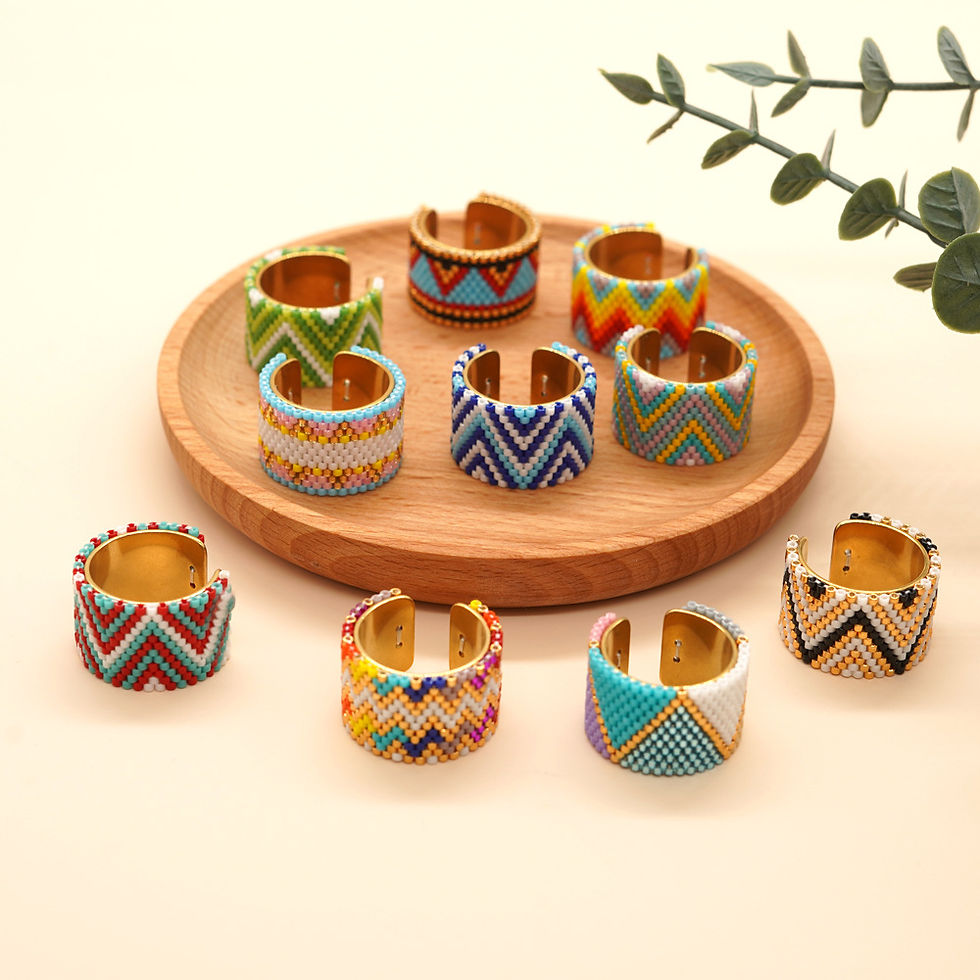
The trend extends to earrings, where mismatched earrings featuring different bead combinations allow wearers to express individual style. Pearl earrings incorporating seed beads create rainbow effects, while statement necklaces combine multiple bead types for bold visual impact. This versatility makes beaded jewelry ideal for brands building comprehensive collections without massive upfront investments.
Manufacturing beaded jewelry also supports the sustainability trend, as many beads can be sourced from recycled materials or sustainable sources. The production process generates minimal waste compared to traditional metalworking, and the modular nature allows for easy customization and repair—extending product lifecycle and supporting circular economy principles.

3. Tech-Enhanced Personalization for Personal Style
Digital Customization Technologies
Digital technology is revolutionizing how consumers interact with jewelry, creating opportunities for mass customization that were impossible just a few years ago. Advanced 3D modeling, virtual try-on technologies, and data-driven design tools enable independent brands to offer truly personalized pieces while maintaining efficient production processes.
This trend manifests in multiple ways: customers can modify existing designs through online configurators, upload personal symbols or text for incorporation into pieces, or even co-create entirely new designs with brands. The technology supports everything from custom-engraved bangles to personalized charm combinations for bracelets and necklaces.

Manufacturing Requirements and Competitive Advantages
From a manufacturing perspective, tech-enhanced personalization requires flexible production systems capable of handling unique specifications without disrupting workflow. Laser engraving equipment, modular design systems, and digital inventory management become essential tools. The key advantage for independent brands lies in offering personalization levels that larger manufacturers cannot economically support, creating genuine competitive differentiation.
The trend particularly benefits rings and bracelets, where sizing and personal symbols carry emotional significance. Successful implementation requires manufacturers who understand both the technical requirements and the rapid turnaround expectations of personalized orders.
4. Silver Jewelry and Geometric Minimalism: Precision in Simplicity
Clean Lines and Architectural Design
Clean lines and architectural shapes define the geometric minimalism trend, representing a sophisticated response to the maximalist tendencies of recent years. This approach emphasizes sculptural cuffs, elongated silhouettes, and intricate designs that showcase manufacturing precision rather than material abundance.
The trend favors quality over quantity, with consumers investing in fewer, better-made pieces that complement various outfits and occasions. Geometric designs work particularly well in silver jewelry, where the metal's clean appearance enhances angular forms and creates striking contrasts with softer elements like turquoise or garnet accents.

Precision Manufacturing Requirements
Manufacturing geometric pieces requires exceptional precision and finishing capabilities. Unlike organic forms that can hide minor imperfections, geometric jewelry demands perfect angles, smooth surfaces, and consistent proportions. This precision requirement actually benefits independent brands working with experienced manufacturers, as the technical expertise becomes a significant competitive advantage.
Sustainable Production Benefits
The efficiency of geometric production also supports sustainable practices—minimal material waste, streamlined processes, and designs that showcase metal and stone quality rather than relying on complex surface treatments or excessive ornamentation.
Manufacturing Insights for 2025 Success
These jewelry trends represent genuine opportunities for independent European brands willing to partner with manufacturers who understand both technical requirements and market dynamics. The convergence of sustainability, personalization, and craftsmanship creates a sweet spot where small-batch production capabilities become genuine competitive advantages.
Success in 2025 requires manufacturers who can adapt quickly to trend variations, support rapid prototyping, and maintain quality standards across diverse product types—from delicate beaded strands to precision geometric forms. For independent brands planning their 2025 collections, the key lies in choosing manufacturing partners who view trends not as constraints but as creative opportunities to showcase technical expertise and design innovation.
Ready to explore how these trends can transform your jewelry collection? LANCUI's manufacturing consultants specialize in helping independent brands navigate trend implementation while maintaining production efficiency and quality standards.


Comments